Saturday, December 13, 2025 / Clicky News

Google Disco : The New AI-First Browser from Google Labs

Google Disco : The New AI-First Browser from Google Labs

Google’s latest experiment, Disco, promises to turn our cluttered browsers into streamlined, interactive applications. Powered by Gemini 3, it creates custom ‘GenTabs’ that might just change how we interact with the web forever.
Google’s latest experiment, Disco, promises to turn our cluttered browsers into streamlined, interactive applications. Powered by Gemini 3, it creates custom ‘GenTabs’ that might just change how we interact with the web forever.

Oli Yeates

Oli Yeates

CEO & Founder

CEO & Founder

We have all been there. You start planning a holiday or researching a competitor, and within minutes your browser is a graveyard of fifty microscopic tabs. You can’t find the flight comparison page, and you have lost the hotel booking form entirely.

Google’s new experimental browser, Disco, aims to solve this common headache. Emerging from Google Labs this week, Disco is not just another way to view websites. It uses the new Gemini 3 model to actively build “GenTabs”—custom, interactive web apps generated from your browsing context.

Here is what you need to know about this shift in web browsing.

What is Google Disco?

Disco is described by Google as a “discovery vehicle”. It operates on the Chromium engine but fundamentally changes the user interface. Instead of a passive row of tabs, Disco acts as an active partner in your workflow.

The browser analyses your open pages and search queries to understand the task you are trying to complete. It then offers to consolidate that information into a single, cohesive interface.

The Power of GenTabs

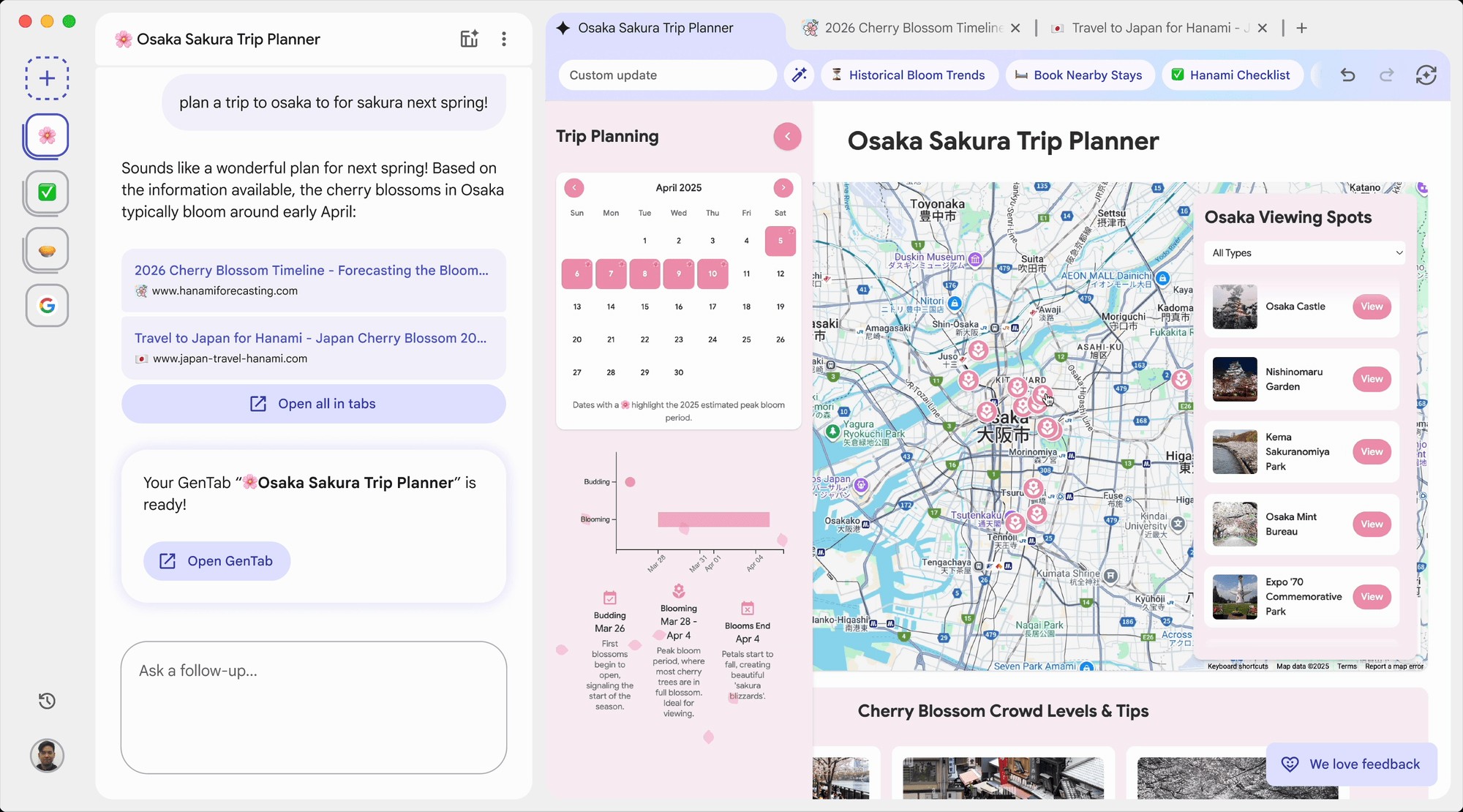
The standout feature is undoubtedly GenTabs. If you have ten tabs open about a winter trip to Japan, Disco can synthesise them into one “Trip Planner” application.

This is not just a summary. It is a functional web app containing:

  • Interactive maps with your pinned locations.

  • An itinerary builder linked to your calendar.

  • Budget checklists drawn from flight and hotel pricing on your open tabs.

Everything is dynamic. If you update a preference in the GenTab, it pulls fresh data from the underlying sources. It effectively turns the web from a library of static pages into a bespoke software suite for your specific project.

Why It Matters

For digital professionals and marketers, this represents a significant evolution in user behaviour. We are moving from search-and-click to prompt-and-build.

Contextual Understanding Gemini 3’s ability to “read” the context of a browsing session means users will spend less time managing windows and more time engaging with content. For brands, this highlights the importance of structured data. If your site’s content is easily machine-readable, it is more likely to be featured prominently in a user’s generated application.

The "Zero-Code" Future Disco allows anyone to build these mini-apps without writing a single line of code. You simply describe what you need, or let the browser infer it from your activity. It democratises the creation of tools that previously would have required complex software or multiple standalone services.

Availability

Currently, Google Disco is in an experimental phase. It is available to a small cohort of testers on macOS, with a waitlist open for broader access.

While it is unlikely to replace Chrome overnight, Disco offers a fascinating glimpse into the future. The tyranny of the tab may finally be coming to an end, replaced by a web that builds itself around you.

We have all been there. You start planning a holiday or researching a competitor, and within minutes your browser is a graveyard of fifty microscopic tabs. You can’t find the flight comparison page, and you have lost the hotel booking form entirely.

Google’s new experimental browser, Disco, aims to solve this common headache. Emerging from Google Labs this week, Disco is not just another way to view websites. It uses the new Gemini 3 model to actively build “GenTabs”—custom, interactive web apps generated from your browsing context.

Here is what you need to know about this shift in web browsing.

What is Google Disco?

Disco is described by Google as a “discovery vehicle”. It operates on the Chromium engine but fundamentally changes the user interface. Instead of a passive row of tabs, Disco acts as an active partner in your workflow.

The browser analyses your open pages and search queries to understand the task you are trying to complete. It then offers to consolidate that information into a single, cohesive interface.

The Power of GenTabs

The standout feature is undoubtedly GenTabs. If you have ten tabs open about a winter trip to Japan, Disco can synthesise them into one “Trip Planner” application.

This is not just a summary. It is a functional web app containing:

  • Interactive maps with your pinned locations.

  • An itinerary builder linked to your calendar.

  • Budget checklists drawn from flight and hotel pricing on your open tabs.

Everything is dynamic. If you update a preference in the GenTab, it pulls fresh data from the underlying sources. It effectively turns the web from a library of static pages into a bespoke software suite for your specific project.

Why It Matters

For digital professionals and marketers, this represents a significant evolution in user behaviour. We are moving from search-and-click to prompt-and-build.

Contextual Understanding Gemini 3’s ability to “read” the context of a browsing session means users will spend less time managing windows and more time engaging with content. For brands, this highlights the importance of structured data. If your site’s content is easily machine-readable, it is more likely to be featured prominently in a user’s generated application.

The "Zero-Code" Future Disco allows anyone to build these mini-apps without writing a single line of code. You simply describe what you need, or let the browser infer it from your activity. It democratises the creation of tools that previously would have required complex software or multiple standalone services.

Availability

Currently, Google Disco is in an experimental phase. It is available to a small cohort of testers on macOS, with a waitlist open for broader access.

While it is unlikely to replace Chrome overnight, Disco offers a fascinating glimpse into the future. The tyranny of the tab may finally be coming to an end, replaced by a web that builds itself around you.

more BLogs

more BLogs