Saturday, December 6, 2025 / Clicky News
Google’s Year in Search 2025: The Shift from Keywords to Conversation
Google’s ‘Year in Search’ 2025 release highlights a fundamental shift from simple searching to active conversation with the internet.
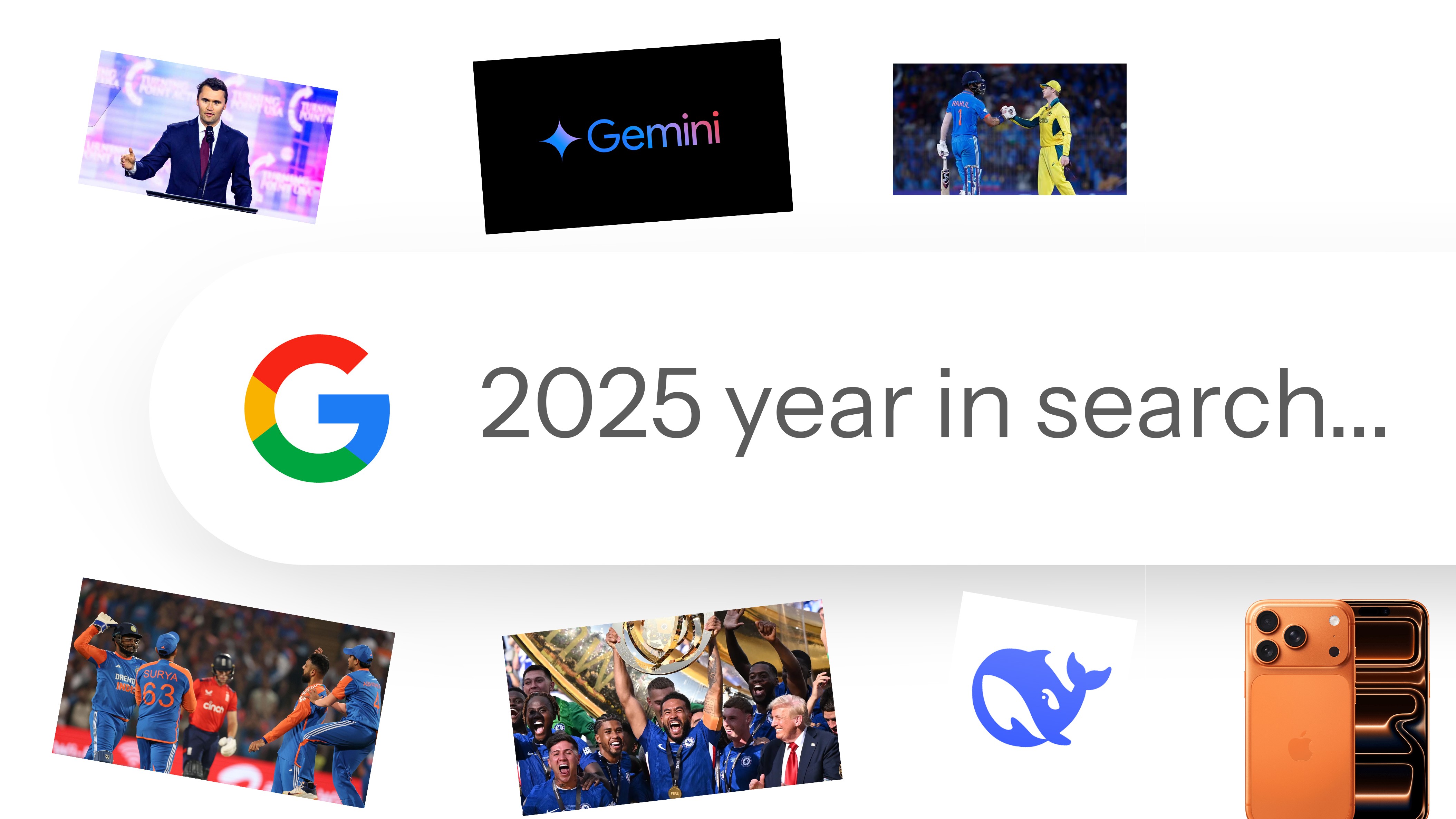
Every December, we look forward to Google’s “Year in Search” release. It is usually a nostalgic look back at the people, events and trends that defined the last 12 months. But this year, the data reveals something far more significant than just viral moments. It highlights a fundamental shift in how we interact with the internet itself.
Google’s 2025 report shows that we are no longer just searching; we are conversing.
The Top Trending Queries of 2025
Before we dive into the strategy, let's look at what actually captured the world's attention this year. This list is a fascinating cross-section of tech utility, global sport and viral culture.
Global Top Trending Searches:
Gemini (Google's AI assistant takes the top spot)
India vs England (Cricket fever remains a massive global driver)
Charlie Kirk (News and politics driving immense volume)
Club World Cup (Football continues to dominate sports search)
India vs Australia
DeepSeek (Another AI tool cracking the top ten)
Asia Cup
Iran
iPhone 17 (Tech hardware holding its ground)
Pakistan and India
What does this list tell us?
The most immediate takeaway is the dominance of AI. With "Gemini" taking the number one spot globally and "DeepSeek" appearing at number six, it is clear that AI tools have transitioned from novelty to daily necessity. People aren't just reading about AI anymore; they are actively searching for the login pages and interfaces to use them.
Secondly, live sport remains one of the few things that can compete with big tech for attention. For UK advertisers, the massive volume around "India vs England" and the "Club World Cup" proves that live events are still unparalleled for real-time engagement.
Finally, we see the power of viral commerce. While not in the top global ten, the report highlighted "Labubu" (the designer toy) and "KPop Demon Hunters" (Netflix) as massive breakouts in their respective categories. This proves that despite high-tech advancements, collective obsessions and trends still drive huge waves of search traffic.
The death of "Keywordese"
Perhaps the most fascinating insight from the report is the change in how people are searching.
For years, search behaviour was defined by short, punchy keywords. We learned to speak "computer" to get the best results. That is officially changing. Google reported a massive 70% year-over-year increase in searches starting with "tell me about…".
Similarly, "how do I…" queries reached an all-time high, growing by 25% compared to 2024.
This surge in conversational queries suggests that features like AI Overviews and AI Mode are reshaping user expectations. People are growing comfortable asking complex, natural-language questions and expecting detailed, conversational answers in return.
What this means for your 2026 strategy?
So, how should brands adapt to this data?
1. Optimise for conversation, not just keywords
With the rise of "tell me about" queries, your content needs to answer questions directly and comprehensively. The era of keyword stuffing is long gone. Focus on natural language and structured data that helps AI models understand the context of your content.
2. Freshness is vital
Google’s data highlights that the biggest opportunities often lie in emerging topics. The trending queries of 2025 were defined by their "spikes" in interest. Brands that can react quickly to news and trends (newsjacking) will continue to see outsized returns.
3. Prepare for the "AI consumer"
The fact that Gemini was the top global search tells us that your audience is likely using AI to research you. Ensuring your brand information is clear, consistent and authoritative across the web is crucial for showing up in AI-generated answers.
As we head into 2026, the line between "search engine" and "answer engine" is blurrier than ever. It is an exciting time to be in digital marketing, and if you need help navigating these shifts, you know where to find us.
Every December, we look forward to Google’s “Year in Search” release. It is usually a nostalgic look back at the people, events and trends that defined the last 12 months. But this year, the data reveals something far more significant than just viral moments. It highlights a fundamental shift in how we interact with the internet itself.
Google’s 2025 report shows that we are no longer just searching; we are conversing.
The Top Trending Queries of 2025
Before we dive into the strategy, let's look at what actually captured the world's attention this year. This list is a fascinating cross-section of tech utility, global sport and viral culture.
Global Top Trending Searches:
Gemini (Google's AI assistant takes the top spot)
India vs England (Cricket fever remains a massive global driver)
Charlie Kirk (News and politics driving immense volume)
Club World Cup (Football continues to dominate sports search)
India vs Australia
DeepSeek (Another AI tool cracking the top ten)
Asia Cup
Iran
iPhone 17 (Tech hardware holding its ground)
Pakistan and India
What does this list tell us?
The most immediate takeaway is the dominance of AI. With "Gemini" taking the number one spot globally and "DeepSeek" appearing at number six, it is clear that AI tools have transitioned from novelty to daily necessity. People aren't just reading about AI anymore; they are actively searching for the login pages and interfaces to use them.
Secondly, live sport remains one of the few things that can compete with big tech for attention. For UK advertisers, the massive volume around "India vs England" and the "Club World Cup" proves that live events are still unparalleled for real-time engagement.
Finally, we see the power of viral commerce. While not in the top global ten, the report highlighted "Labubu" (the designer toy) and "KPop Demon Hunters" (Netflix) as massive breakouts in their respective categories. This proves that despite high-tech advancements, collective obsessions and trends still drive huge waves of search traffic.
The death of "Keywordese"
Perhaps the most fascinating insight from the report is the change in how people are searching.
For years, search behaviour was defined by short, punchy keywords. We learned to speak "computer" to get the best results. That is officially changing. Google reported a massive 70% year-over-year increase in searches starting with "tell me about…".
Similarly, "how do I…" queries reached an all-time high, growing by 25% compared to 2024.
This surge in conversational queries suggests that features like AI Overviews and AI Mode are reshaping user expectations. People are growing comfortable asking complex, natural-language questions and expecting detailed, conversational answers in return.
What this means for your 2026 strategy?
So, how should brands adapt to this data?
1. Optimise for conversation, not just keywords
With the rise of "tell me about" queries, your content needs to answer questions directly and comprehensively. The era of keyword stuffing is long gone. Focus on natural language and structured data that helps AI models understand the context of your content.
2. Freshness is vital
Google’s data highlights that the biggest opportunities often lie in emerging topics. The trending queries of 2025 were defined by their "spikes" in interest. Brands that can react quickly to news and trends (newsjacking) will continue to see outsized returns.
3. Prepare for the "AI consumer"
The fact that Gemini was the top global search tells us that your audience is likely using AI to research you. Ensuring your brand information is clear, consistent and authoritative across the web is crucial for showing up in AI-generated answers.
As we head into 2026, the line between "search engine" and "answer engine" is blurrier than ever. It is an exciting time to be in digital marketing, and if you need help navigating these shifts, you know where to find us.
more BLogs
more BLogs


