Tuesday, January 6, 2026

Why 2026 is the Year of Ai Integration, Not Replacement

Why 2026 is the Year of Ai Integration, Not Replacement

It feels like we have been having the "Will AI replace us?" conversation for half a decade now. But as we settle into 2026, the narrative has shifted. We are no longer talking about replacement. We are talking about orchestration.
It feels like we have been having the "Will AI replace us?" conversation for half a decade now. But as we settle into 2026, the narrative has shifted. We are no longer talking about replacement. We are talking about orchestration.

Oli Yeates

Oli Yeates

CEO & Founder

CEO & Founder

If 2025 was the year of experimentation, 2026 is the year of integration. The tools are no longer novelties but the engine room. But does that mean the human pilot is redundant? Far from it.

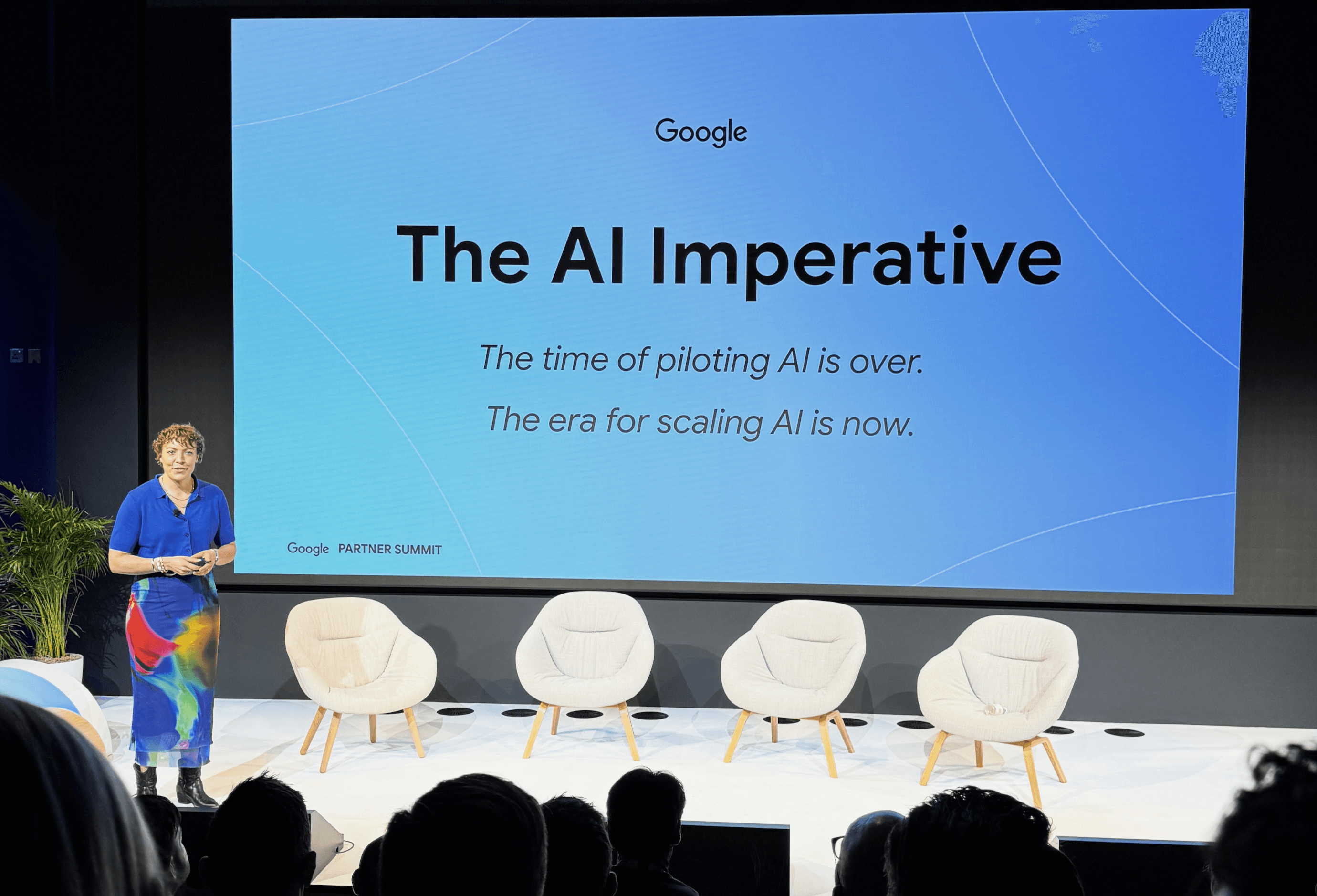
We saw this shift cemented when we attended Google's Premier Partner Conference at the end of last year. The message from the stage was impossible to ignore. They declared "The AI Imperative" and told us plainly that "The time of piloting AI is over. The era for scaling AI is now." That directive has stuck with me.

We have been looking closely at the latest updates from the tech giants, and the landscape for content production has never looked more distinct. Here is who we think wins the battle for attention this year.

The Machine: Speed & Scale

There is no denying the sheer velocity at which AI can now operate. If you look at the recent updates from Google, specifically regarding Gemini 3 and Veo 3.1, the focus is clearly on multimodal fluidity. We are seeing models that do not just "write text" or "make an image" but understand the relationship between the two in real-time.

For us agency folk, this means the "heavy lifting" of content production, such as the resizing, the localising and the endless formatting, is reducing.

  • The Win: AI wins on volume and variation. It can produce 50 versions of an ad creative in the time it takes a human to open Photoshop.

  • The Risk: Homogenisation. When everyone uses the same "best practice" algorithms, everything starts to look the same.

The Platform: "Goal-Only" Automation

Meta has been pushing towards this for years, and their 2026 roadmap for fully automated ad creation is the culmination of that vision.

The concept is simple: you provide a URL and a budget, and their AI handles the creative, the targeting, and the optimisation. It is the ultimate "set it and forget it" promise. For small businesses, this is a revolution. For premium brands, it presents a challenge.

If you rely entirely on the platform's AI to define your brand, you are renting your identity. You might get clicks, but are you building a lasting memory?

The Human: Strategy & Soul

So where does that leave the human creator?

If AI is the engine, strategy is the map. In 2026, the most valuable skill is not creating the asset, but directing it.

  • Context: AI can generate a blog post about "property trends in Manchester", but it cannot interview a local developer about the specific grit and community feel of a new neighbourhood.

  • Empathy: Data can predict what a user clicks, but human intuition understands what a user feels.

  • Taste: This is the big one. In a world flooded with "good enough" AI content, human curation becomes the premium filter.

The Verdict: The Hybrid Model Wins

The winner in 2026 is not the AI purist or the analogue stubborn. It is the Orchestrator.

We are seeing a move towards "Content Factories" where:

  1. AI handles the base: It drafts the SEO meta data, generates the storyboard concepts, and creates the first pass of data-driven copy.

  2. Humans apply the polish: We inject the tone of voice, verify the facts (crucial for E-E-A-T), and add the creative spark that defies the algorithm.

The brands that will lose are the ones who view AI solely as a cost-cutting mechanism. The brands that will win are those that use the time saved by AI to invest in higher-quality, human-led storytelling.

A nice analogy is: AI builds the house. Humans make it a home.

If 2025 was the year of experimentation, 2026 is the year of integration. The tools are no longer novelties but the engine room. But does that mean the human pilot is redundant? Far from it.

We saw this shift cemented when we attended Google's Premier Partner Conference at the end of last year. The message from the stage was impossible to ignore. They declared "The AI Imperative" and told us plainly that "The time of piloting AI is over. The era for scaling AI is now." That directive has stuck with me.

We have been looking closely at the latest updates from the tech giants, and the landscape for content production has never looked more distinct. Here is who we think wins the battle for attention this year.

The Machine: Speed & Scale

There is no denying the sheer velocity at which AI can now operate. If you look at the recent updates from Google, specifically regarding Gemini 3 and Veo 3.1, the focus is clearly on multimodal fluidity. We are seeing models that do not just "write text" or "make an image" but understand the relationship between the two in real-time.

For us agency folk, this means the "heavy lifting" of content production, such as the resizing, the localising and the endless formatting, is reducing.

  • The Win: AI wins on volume and variation. It can produce 50 versions of an ad creative in the time it takes a human to open Photoshop.

  • The Risk: Homogenisation. When everyone uses the same "best practice" algorithms, everything starts to look the same.

The Platform: "Goal-Only" Automation

Meta has been pushing towards this for years, and their 2026 roadmap for fully automated ad creation is the culmination of that vision.

The concept is simple: you provide a URL and a budget, and their AI handles the creative, the targeting, and the optimisation. It is the ultimate "set it and forget it" promise. For small businesses, this is a revolution. For premium brands, it presents a challenge.

If you rely entirely on the platform's AI to define your brand, you are renting your identity. You might get clicks, but are you building a lasting memory?

The Human: Strategy & Soul

So where does that leave the human creator?

If AI is the engine, strategy is the map. In 2026, the most valuable skill is not creating the asset, but directing it.

  • Context: AI can generate a blog post about "property trends in Manchester", but it cannot interview a local developer about the specific grit and community feel of a new neighbourhood.

  • Empathy: Data can predict what a user clicks, but human intuition understands what a user feels.

  • Taste: This is the big one. In a world flooded with "good enough" AI content, human curation becomes the premium filter.

The Verdict: The Hybrid Model Wins

The winner in 2026 is not the AI purist or the analogue stubborn. It is the Orchestrator.

We are seeing a move towards "Content Factories" where:

  1. AI handles the base: It drafts the SEO meta data, generates the storyboard concepts, and creates the first pass of data-driven copy.

  2. Humans apply the polish: We inject the tone of voice, verify the facts (crucial for E-E-A-T), and add the creative spark that defies the algorithm.

The brands that will lose are the ones who view AI solely as a cost-cutting mechanism. The brands that will win are those that use the time saved by AI to invest in higher-quality, human-led storytelling.

A nice analogy is: AI builds the house. Humans make it a home.

more BLogs

more BLogs