Michael Scott ·
Yahoo Search goes AI in the US, with answers from Claude
Yahoo has rebuilt its search around Scout, its Claude-powered AI answer engine. Here's what's changed, how ads work, and what UK brands should do.
For most marketers, Yahoo hasn't featured in search conversations for over a decade. That may be about to change.
Yahoo Scout, its AI answer engine powered by Anthropic's Claude, has left beta after delivering more than 3 billion answers, and Yahoo Search has been rebuilt around it. It would be easy to dismiss this as a legacy brand chasing the AI wave, but how Yahoo has built it tells us a lot about where search is heading.
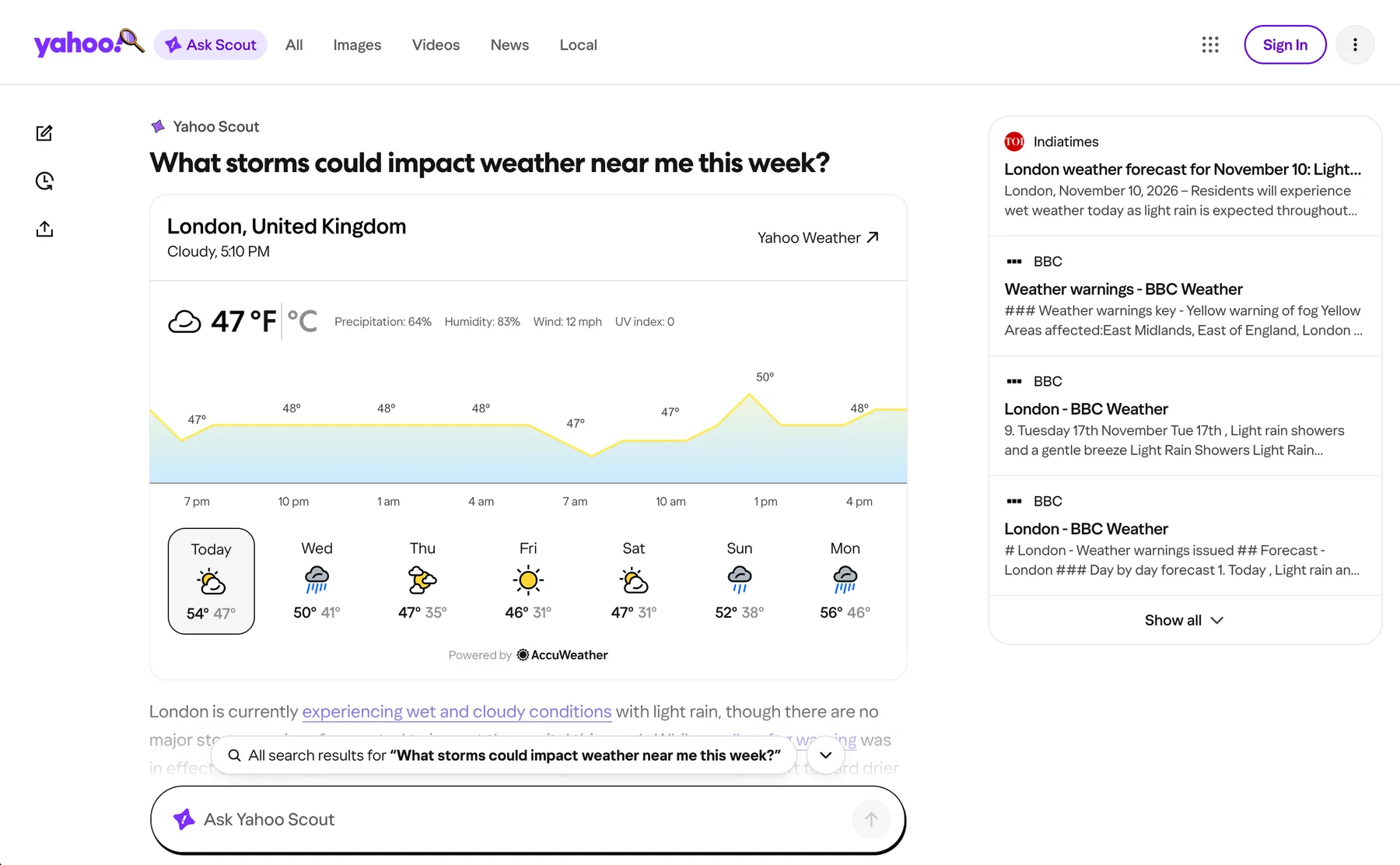
One thing to know up front: Scout is a US product for now. If you try to use it from the UK, you won't get the new experience, and Yahoo hasn't said when it will arrive here. So why should UK brands pay attention? Because the pieces behind it already reach UK audiences: Microsoft delivers Yahoo's ads, Claude powers its answers, and Yahoo Mail still has millions of UK users.
What Yahoo has announced
Scout launched in beta in the US in January 2026. It runs on Anthropic's Claude, combined with Yahoo's own data and web results from Microsoft Bing. The latest update brings:
- A rebuilt Yahoo Search that assesses each query and lets users switch between classic results and an AI answer.
- Scout across Yahoo, inside Finance, Sports, News and more.
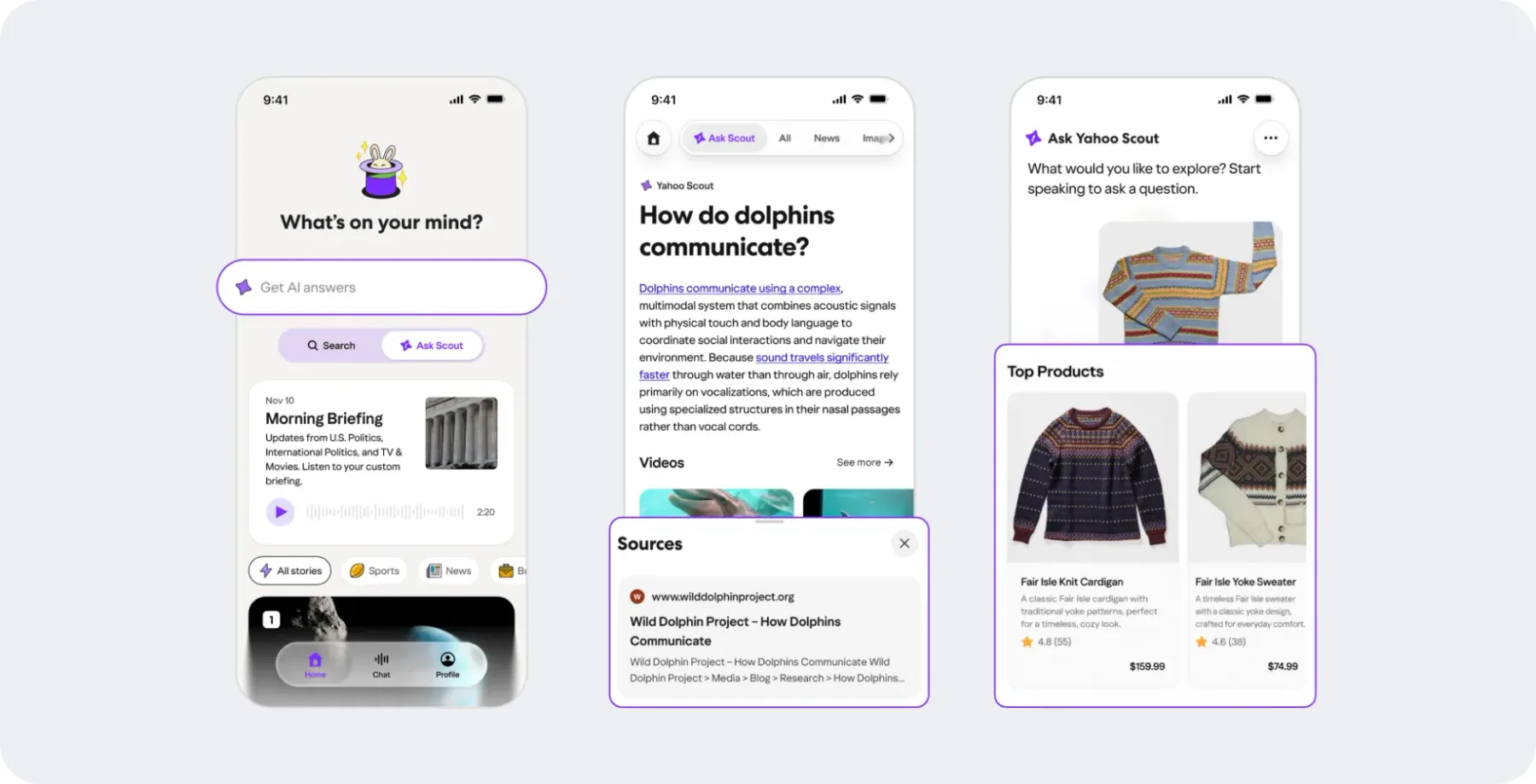
- A new Scout app with live voice conversations and the ability to ask questions about images.
Crucially, links and sources stay prominent throughout.
Why "links first" matters
AI answers have been swallowing clicks, and many businesses have already seen it in their organic traffic. Yahoo has taken a different line, putting sources front and centre and treating clicking through as part of the experience. It shows that AI search isn't one fixed thing: different platforms will send very different amounts of traffic back to websites.
What about ads? Follow Microsoft
Microsoft Advertising has served Yahoo's search ads in the UK since 2012, and has been the exclusive platform for Yahoo and AOL search ads since 2019.
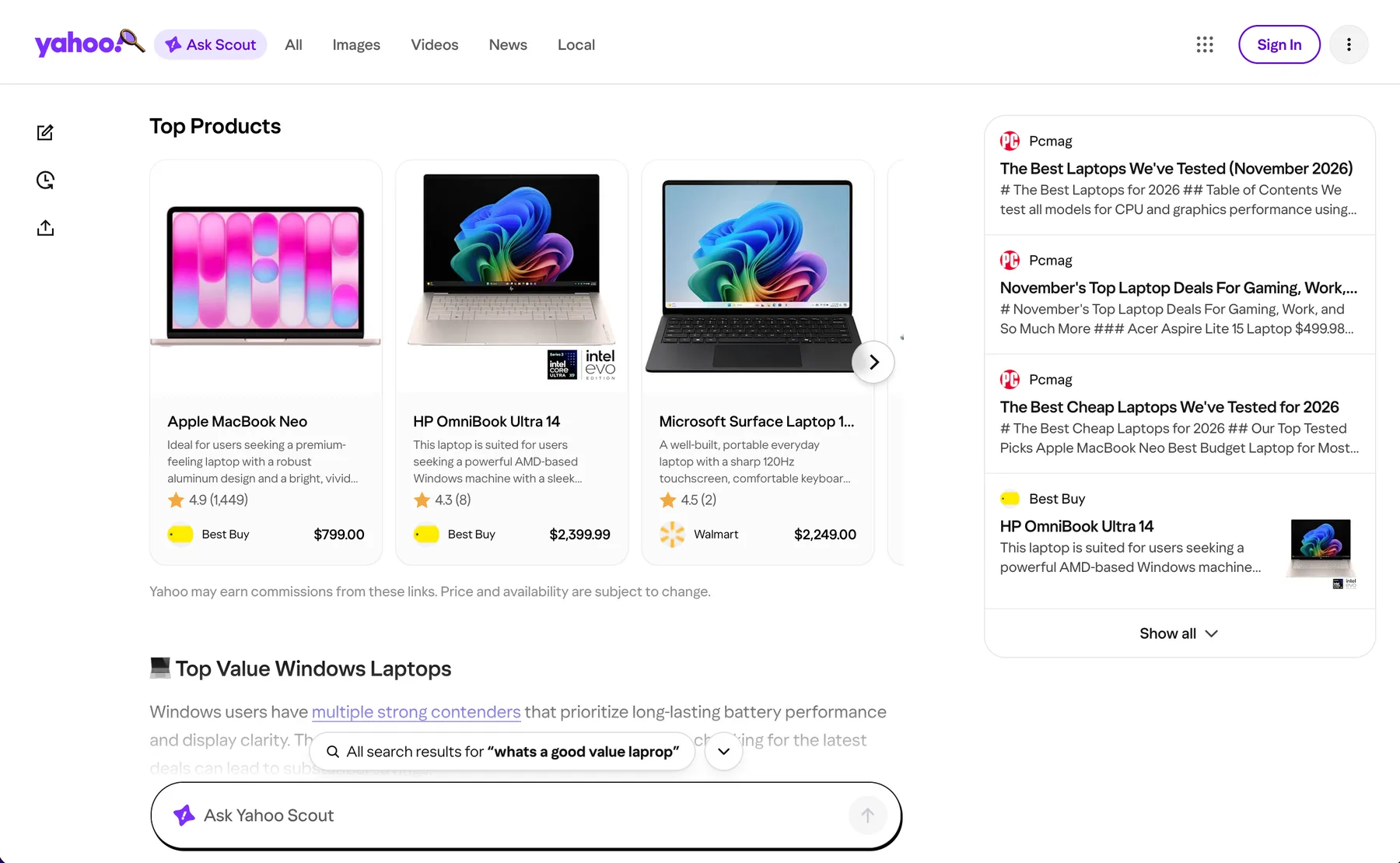
Scout continues that. The ads in Scout today are Microsoft Advertising ads, charged per click and shown below some answers on a small share of queries. Microsoft supplies them; Yahoo decides when they appear.
So can you advertise in Yahoo Scout? Yes, but not directly. There's no Scout campaign to buy and no Scout-specific targeting or reporting. You run search campaigns in Microsoft Advertising with Yahoo included in your distribution, and your ads become eligible. Yahoo's CEO has also talked about future sponsored links woven into the answer itself, which would be bought the same way.
Should UK brands care?
Yahoo alone won't move the dial for most UK businesses any time soon. Google still dominates. But when a 30-year-old search brand rebuilds around AI answers, and Google, Microsoft, OpenAI and Perplexity are heading the same way, the direction is clear. And because AI engines share so much underneath (Scout draws on Bing and Claude), work that helps you in one tends to help across the others.
How many people actually use Yahoo?
StatCounter, which tracks which search engine sends each visit across billions of page views a month, shows how dominant Google remains. In the UK, Google accounts for around 92% of search, Bing just under 6% and Yahoo 1.45%. That's a small share of a very big number. UK users run around 3 billion Google searches a month, so 1.45% works out at roughly 47 million Yahoo searches a month. Across all its sites, from Mail to News and Finance, Yahoo reaches around 19 million people in the UK each month. In the US, where Scout launched, Yahoo's share is around 2.5% and Bing's nearly 10%.
Together, Bing and Yahoo make up around 7% of UK search, and that combined slice is what Microsoft Advertising reaches. Small next to Google, but not one to ignore. Yahoo also does better on desktop, where it held 2.25% of UK search in July 2026.
Why Yahoo Mail is still so popular in the UK
Search share undersells Yahoo's UK footprint, because its real stronghold here is email.
- Huge brand demand. Semrush data shows "yahoo mail" is searched around 7.5 million times a month in the UK, more than twice as often as "yahoo" on its own. Many of those are people simply heading to their inbox.
- A long history with UK broadband. For years, BT's broadband email ran on Yahoo, putting Yahoo-powered addresses into a huge number of UK homes.
- Addresses people never change. An email address held for 15 or 20 years is tied to banking, shopping, family and work. Most people keep it rather than move.
- Still a major UK inbox. In one study of UK email marketing lists, Yahoo and AOL addresses made up 18% of the total, behind only Gmail (33%) and Microsoft (23%).
That matters for Scout. Yahoo is building Scout into Mail, where it can summarise long threads and pull out actions, so many UK users may meet Yahoo's AI in their inbox long before they use it to search.
5 things to do now
- Audit how AI engines describe you. Ask them your customers' questions and check whether you're mentioned, cited and accurate.
- Make your content easy to cite. Clear headings, concise answers, original data and real expertise.
- Don't neglect Bing. Verify your site in Bing Webmaster Tools and submit your sitemaps.
- Give people a reason to click. Tools, original research, detailed guides and strong offers can't be summarised away.
- Track AI visibility alongside rankings. Monitor citations in AI answers and referral traffic from AI platforms.
Our take
Search is splitting into answers and websites, and the brands that win will be useful in both. The fundamentals still hold: expert, helpful content, a sound website and a strong brand. They just need to perform in more places.
Want to know how visible your brand is in AI search? Get in touch with the Clicky team and we'll show you where you appear today and how to get cited more often.