Oli Yeates · 5 August 2026
AI Images vs Professional Photography: Where I Draw the Line
The hero image on this post is AI-generated, and I still think professional photography wins for a lot of what brands put online. My honest take on which website images are wallpaper, which ones are promises, and how one good shoot day plus AI now does the job of three.
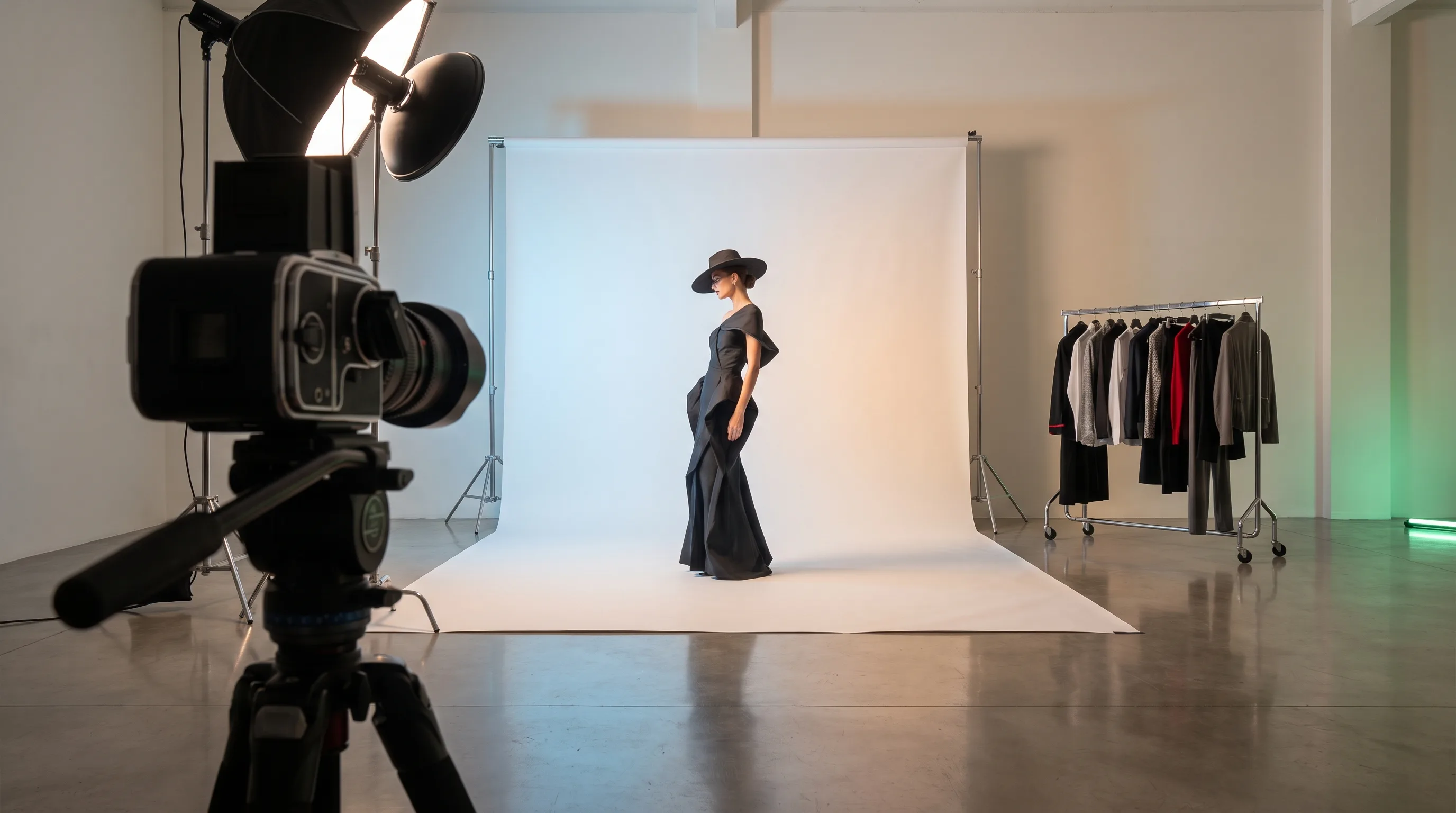
Full disclosure before we start: the hero image on this post is AI-generated. A high-end fashion shoot that never happened, in a studio that doesn't exist, lit by a photographer who was never born. It took about ninety seconds and cost pennies.
And I still think professional photography is the better choice for a lot of what brands put online. Both of those things are true, and the interesting bit is working out where the line sits. So here's my honest take, as someone who runs an agency that publishes AI prompt libraries one week and books photographers the next.
A lot of website imagery is wallpaper. Admit it.
Here's the uncomfortable truth the photography industry doesn't love and the AI crowd overplays: a big chunk of the imagery on any website is arbitrary. It's wallpaper. It sets a mood, fills a banner, breaks up some text... and nobody, genuinely nobody, is studying it.
Think about an ecommerce store with 3,000 SKUs. The category page banners. The lifestyle filler on the delivery information page. The generic "team working happily" shot on the about page of a B2B site. The blog hero (hello). If an image exists to decorate rather than to inform, the customer glances at it for half a second and moves on with their life.
For that tier of imagery, AI isn't just acceptable, it's the obviously right call. You get exactly the composition you want, in your brand palette, at any aspect ratio, in minutes. No licensing worries, no "everyone else used this same stock photo" problem (we've all seen that one woman laughing at salad), and no burning half a day of a designer's time hunting through image libraries.
If your objection to AI here is principle rather than outcome, I'd gently suggest the principle is costing you money.
So when do you book the photographer?
When the image is making a promise.
That's the whole test, honestly. Some images on your site are decoration, but some are commitments. A product photo says "this is what will arrive in the box". A team photo says "these are the actual humans you'll deal with". A case study photo says "we really did this work, in this place, for this client". Break any of those promises and you don't just lose a sale... you lose trust, and in ecommerce you gain a returns problem too.
So here's where I'd still spend real money on a real shoot:
Products where the detail is the sale. Fashion, food, furniture, anything where texture, fit, colour accuracy or scale decides the purchase. AI is astonishing at plausible; it is not accountable to the truth. A knitted jumper that looks 10% more luxurious than the one that arrives is a five-star image and a one-star review.
People. Your founder, your team, your customers. Real faces, photographed well, are one of the last cheap trust signals on the internet, precisely because everyone suspects everything else is synthetic now. We keep real photography for our own team pages, and I'd tell every client to do the same.
The big campaign. If a set of images is going to carry your brand for six months, across the website, paid social, out-of-home and print, that's not wallpaper. That's the brand. A proper shoot gives you a look that's genuinely yours, art-directed on purpose, with a consistency AI still struggles to hold across dozens of images. And your team will row in behind a campaign they were on set for in a way they never will for a folder of generated files.
The clever bit: shoot once, then let AI multiply it
This is where I think most brands should actually land in 2026, and it's not a compromise, it's the best of both.
Do the professional campaign shoot. Get the hero images, the real product, the real people, the art direction. Then use AI to extend what the shoot gave you:
Alternatives. Ten background and crop variations of the hero for ad testing, instead of picking one and praying.
Regional tweaks. The same campaign visual reworked for the Manchester audience, the Dubai audience, the US audience... without flying a crew anywhere.
Seasonal refreshes. Your summer campaign asset, believably wintered for the Christmas push, from the shoot you already paid for.
Formats. That perfect landscape shot, extended into a portrait Story crop or a wide web banner without amputating the model's head.
The shoot becomes your source of truth, and AI becomes the multiplier on it. One good shoot day now does the job that used to take three. That's a much better argument for AI than "never pay a photographer again", and it's the one we make to clients.
Where I'd draw the line
If you want the one-paragraph version to take to your next marketing meeting, it's this:
If the image is decoration, generate it. If the image is a promise (this product, these people, this work), shoot it. If it's a campaign, shoot the heart of it professionally and use AI to stretch it further than your budget used to reach. And if you can only afford one shoot this year, spend it on the things only you have: your products, your people, your place.
AI imagery hasn't made photography redundant. It's made it more precious, by finally clearing away all the filler that photographers were never excited about shooting anyway. The brands that get this right won't be the all-AI ones or the AI-never ones... they'll be the ones who know which images are wallpaper and which ones are promises.
If you'd like help working out that split for your brand, or you want a team that can do the AI multiplication properly (we've even published the prompts we use), get in touch with the team >>
Clicky™