Joe Marshall ·
The BIG 2027 Clicky Retail & E-commerce Report
UK shoppers went back to the names they know in 2026. Next, M&S, Currys and Primark grew, Back Market rose 48% and Vinted 28%, while Temu and Shein both fell. What the search data says about Black Friday 2026, and what retail brands should do in 2027.

UK shoppers did not stop searching in 2026. They went back to the names they know. From January to mid-November 2026, searches for Next, M&S, Currys and Primark rose by 16 to 24% on the same weeks of 2025, Back Market grew 48% and Vinted 28%, while Temu, Shein, eBay and Depop all fell. In the run-up to Black Friday, deal searches were down on last year while retailer names grew. For retail brands, 2027 is the year to be found by name, from early November, and inside AI answers.
We compared UK search interest in 2026 with 2025 for the biggest retail names and seasonal searches, using Google Trends for the year to mid-November and Semrush for monthly volumes, and set it against the latest research on how people are shopping. Here is what we found:
- The high street pulled ahead. Next searches rose 24%, M&S 22%, Currys 19% and Primark 16% between January and mid-November.
- The low-price marketplaces lost ground. Shein searches fell 14% and Temu 7%, and Temu was 20% down through the autumn. eBay fell 14%.
- Resale is consolidating. Vinted grew 28% and Back Market 48%, while Depop fell 29%.
- Black Friday 2026 is a name game. In the first 2 weeks of November, searches for "black friday deals" were 10% down on last year, while M&S was up 30%, Next 20% and Primark 15%.
- ASOS came back. ASOS searches rose 33% across the year, one of the biggest gains of any name we tracked.
How we measured it
We used 2 sources. Google Trends gives weekly UK search interest for each term, which we used to compare 1 January to 14 November 2026 with the same weeks of 2025, including the run-up to Black Friday. Semrush gives estimated monthly UK search volumes, which we used for scale and for the opportunity table (latest snapshot, pulled 18 November 2026).
4 caveats are worth knowing:
- Google Trends is an index, not a count. Each term is scored from 0 to 100 against its own busiest week, so we compare each term with itself over time, not one term with another, except where we put 2 terms on the same scale.
- The 2 sources measure differently. Semrush estimates monthly volumes and groups them into bands; Google Trends samples searches week by week. Where they differ, we use Google Trends for the direction of travel in 2026 and Semrush for size.
- A name search is often navigation. Many people type a retailer's name to get to its website. That makes name searches a good measure of attention and loyalty, but not of sales.
- Searches are not sales. They show where attention is going, which usually leads spending. Black Friday falls on 27 November 2026, so our data covers the run-up, not the day itself.
Winners and losers
The growth in 2026 went to names people already know and trust: high-street retailers that sell well online, and the specialist platforms leading second-hand and refurbished. The falls hit the low-price marketplaces and the older ones.
- Back Market grew 48%, to around 201,000 searches a month, while "refurbished iphone" held at 40,500. Shoppers are going straight to a trusted specialist rather than searching generically.
- Next rose 24%, the biggest name on the high street at around 6.1 million searches a month. M&S rose 22%, Currys 19% and Primark 16%.
- ASOS rose 33% to around 1.5 million searches a month, a strong year for the biggest online fashion name.
- eBay, Etsy and Depop all fell, by 14%, 5% and 29%. The older marketplaces are losing attention to specialists such as Vinted and Back Market.
Temu and Shein are both losing interest
On Google Trends, Shein still drew more search interest than Temu in almost every week of 2025 and 2026. But both fell this year: from January to mid-November, Shein was 14% down on the same weeks of 2025 and Temu 7% down, with Temu falling 20% through the autumn. Semrush puts both at around 3 million searches a month, so they remain among the biggest names in UK retail search.
Both still benefit from a rule high-street retailers want changed. Parcels worth £135 or less come into the UK without customs duty. In May 2026, 16 UK retailers including Next, Marks & Spencer, Primark, Argos, ASOS and Currys wrote to the government asking for a £2.60 duty on each low-value parcel, and the government has said it will start charging duty on these parcels by March 2029 at the latest (RTÉ).

Resale and refurbished are consolidating
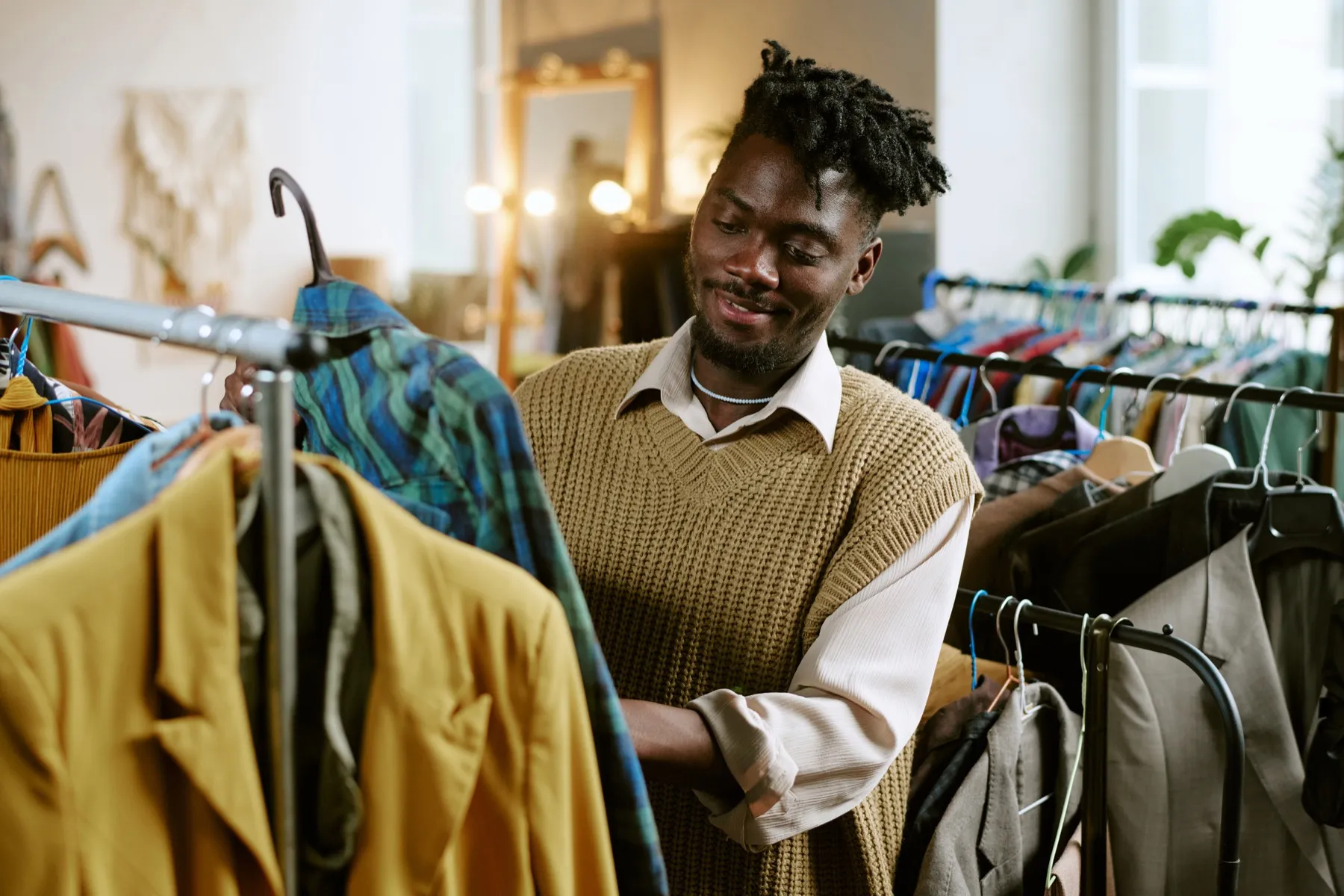
Second-hand is not shrinking, it is concentrating. Vinted searches rose 28% in 2026, to around 3.4 million a month, while Depop fell 29%. Shoppers are going straight to the platform they trust.
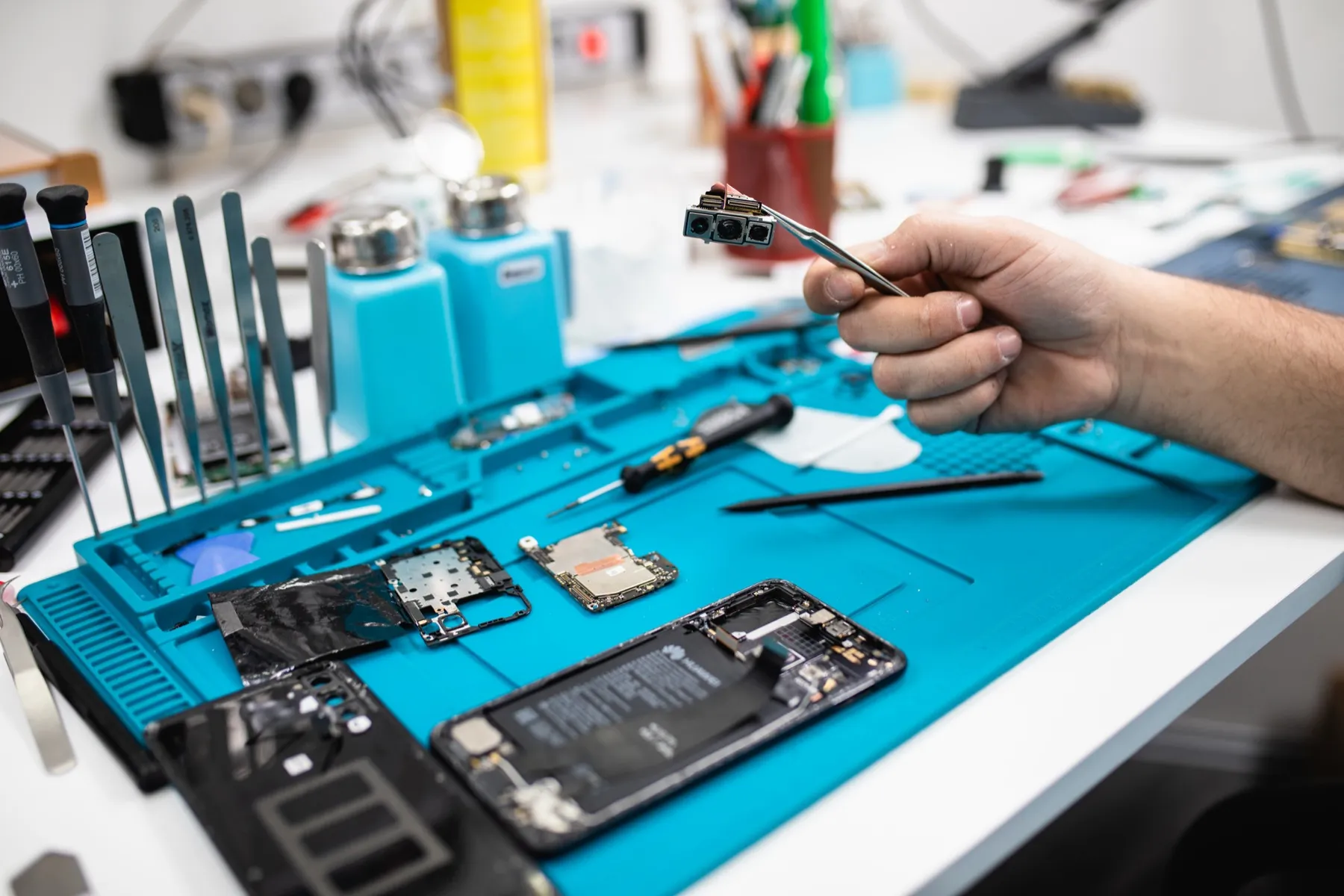
The same is true of refurbished tech. Back Market grew 48% while the generic "refurbished iphone" held at around 40,500 searches a month.
Buy now pay later held steady. Klarna searches were level with last year, at around 368,000 a month.
Black Friday 2026: the run-up so far
Black Friday is still the biggest moment in the retail search year. In 2025, searches for "black friday" and "black friday deals" climbed every week from early October and peaked in the week before the day itself. This year the run-up is following the same shape, but slightly lower: in the first 2 weeks of November, "black friday" was 8% down on last year and "black friday deals" 10%.
Shoppers are not searching less in November. They are searching by name. In the same 2 weeks, M&S searches were up 30%, Vinted 21%, Next 20% and Primark 15%, while Temu and Shein were around a fifth down.
That fits what retailers saw last year. UK retail sales grew just 1.4% in November 2025, the weakest growth in 6 months, but the online share of non-food sales reached 44%, its highest since 2022 (Retail Insight Network). Shoppers were careful, and they went to retailers they already knew. The 2026 data so far points the same way.

Christmas is starting on time. Searches for "christmas gifts" in the autumn were running 6% above last year, and deal-hunting is spreading across the season rather than piling onto one day.
How shoppers discover products now
AI search is becoming a shopping channel, and it is moving fast.
- Google AI Mode is built for shopping. Since November 2025, shoppers can ask AI Mode shopping questions in a conversation and get answers with images, prices, reviews and stock, drawn from a Shopping Graph of over 50 billion product listings, alongside sponsored listings. In the US, Google can also check out on a retailer's site for the shopper (TechCrunch).
- Checkout is coming to the UK. Google's Universal Cart, announced in May 2026, lets people collect items across Search, the Gemini app, YouTube and Gmail and tracks price drops. Its checkout launches in the US first, then Canada and Australia, then the UK, with no UK date yet (IT Brief UK).
- ChatGPT is a place to compare, not yet to buy. OpenAI launched in-chat checkout in September 2025, then scaled it back in March 2026, saying purchases are moving to retailer apps inside ChatGPT (Spree Commerce). For retailers, that means ChatGPT matters most for discovery and comparison.

Google is putting ads inside its AI answers
Google expanded ads in AI Mode to 10 more countries on 28 October 2026 and said the UK, Brazil and Mexico will follow in Q4 2026 (Search Engine Roundtable). Existing Search, Shopping and Performance Max campaigns are eligible automatically, using the same auction, and ads in AI answers cannot be switched off separately from Search (Unite.AI).
For retailers, the product feed is now the ad. A shopper asking AI Mode for "the best winter coat under £100" or "a quieter alternative to an air fryer" will see products whose titles, attributes, prices and reviews clearly answer that question.
For more on shifting budget towards AI answers, owned audiences and better measurement, read our guide: Is your 2027 marketing budget ready for how people search now?
Where the search opportunity is
The seasonal and deal-hunting searches are realistic to compete for. Most of the terms below have an SEO difficulty score under 40, and the click costs are low.
| Search term | Monthly UK searches | CPC (US$) | SEO difficulty (0 to 100) |
|---|---|---|---|
| black friday deals | 60,500 | 0.60 | 58 |
| refurbished iphone | 40,500 | 1.29 | 38 |
| christmas gifts | 33,100 | 0.46 | 38 |
| boxing day sales | 33,100 | 0.00 | 30 |
| voucher codes | 33,100 | 0.39 | 21 |
| cyber monday | 14,800 | 0.71 | 43 |
| christmas gift ideas | 14,800 | 0.39 | 34 |
| click and collect | 9,900 | 0.74 | 36 |
| paypal pay in 3 | 6,600 | 1.72 | 41 |
| discount code | 5,400 | 1.07 | 14 |
Source: Semrush UK database, latest snapshot, pulled 18 November 2026. Monthly searches are the 12-month average, so seasonal terms like "boxing day sales" are far higher in their peak month. CPC as reported by Semrush in US dollars.
The bigger prize is the name search. Most of the November growth went to retailers people already knew, so brand demand, built through the year, is what pays out at peak.
What retail brands should do in 2027
Plan for an earlier peak, earn the name search, and make your products easy for AI to recommend.
- Move your peak plan into November. Brief creative, stock, budgets and site changes for an early-November start, not a Black Friday weekend.
- Build brand demand all year. The 2026 winners, and the early November winners, were names people already searched for. Brand campaigns, social and email in the months before peak are what turn into name searches when it matters.
- Get your product feed ready for AI Mode. Titles, attributes, prices, stock and reviews now decide whether you appear in AI answers and in the ads inside them. Treat the feed as your most important ad.
- Write for questions, not just keywords. Build buying guides and comparison pages that answer the long, specific questions people ask AI tools.
- Take second life seriously. Resale and refurbished are growing through trusted platforms. Consider your own preloved, refurbished or trade-in offer, or a presence on the platforms shoppers already use.
- Compete on value without racing to the bottom. Temu and Shein are losing interest but still draw millions of searches a month. Lead with quality, returns, delivery speed and service where you cannot match them on price.
- Track AI visibility. Monitor how often your brand and products appear in AI answers for your key categories, not just where you rank on Google.
Talk to Clicky
Still finalising your 2027 plan? Start with Is your 2027 marketing budget ready for how people search now?, which includes 5 questions to ask before you sign it off.
Clicky works with retail and e-commerce brands across Google Shopping, paid social, SEO, content and AI search visibility. If you want a 2027 peak plan built on your own data, get in touch with our team.
About The Big Retail & E-commerce Report
The Clicky Big Retail & E-commerce Report tracks what UK shoppers are searching for, using Google Trends and Semrush search data alongside the latest industry research. It looks at what has changed, who is winning and losing, and what retail brands should do next.
Sources
- Google Trends, UK web search, weekly search interest for the retail terms in this report, January 2025 to 14 November 2026, pulled 18 November 2026
- Semrush UK keyword database, 45 retail terms, latest snapshot, pulled 18 November 2026
- Retail Insight Network: November retail growth slows as Budget fears mount in UK (BRC-KPMG Retail Sales Monitor)
- RTÉ: UK retailers call for levy on low-value imports
- TechCrunch: Google expands AI shopping with conversational search and agentic checkout
- IT Brief UK: Google launches Universal Cart for agent-led shopping
- Spree Commerce: OpenAI scales back Instant Checkout in ChatGPT
- Search Engine Roundtable: Google expands ads in AI Mode
- Unite.AI: Google rolls out AI Mode ads in 10 countries, multiturn ads in US