Michael Scott · 22 July 2026
World Cup 2026 Search Data: The Most Googled Moments, Players and Nations of the Tournament
The World Cup is over, Spain are champions, and the planet's search bar kept the minutes. We pulled Google Trends and Semrush data for the whole tournament: the most searched moments, matches, players and nations, from the Azteca opener to Ferran Torres in the 105th minute.
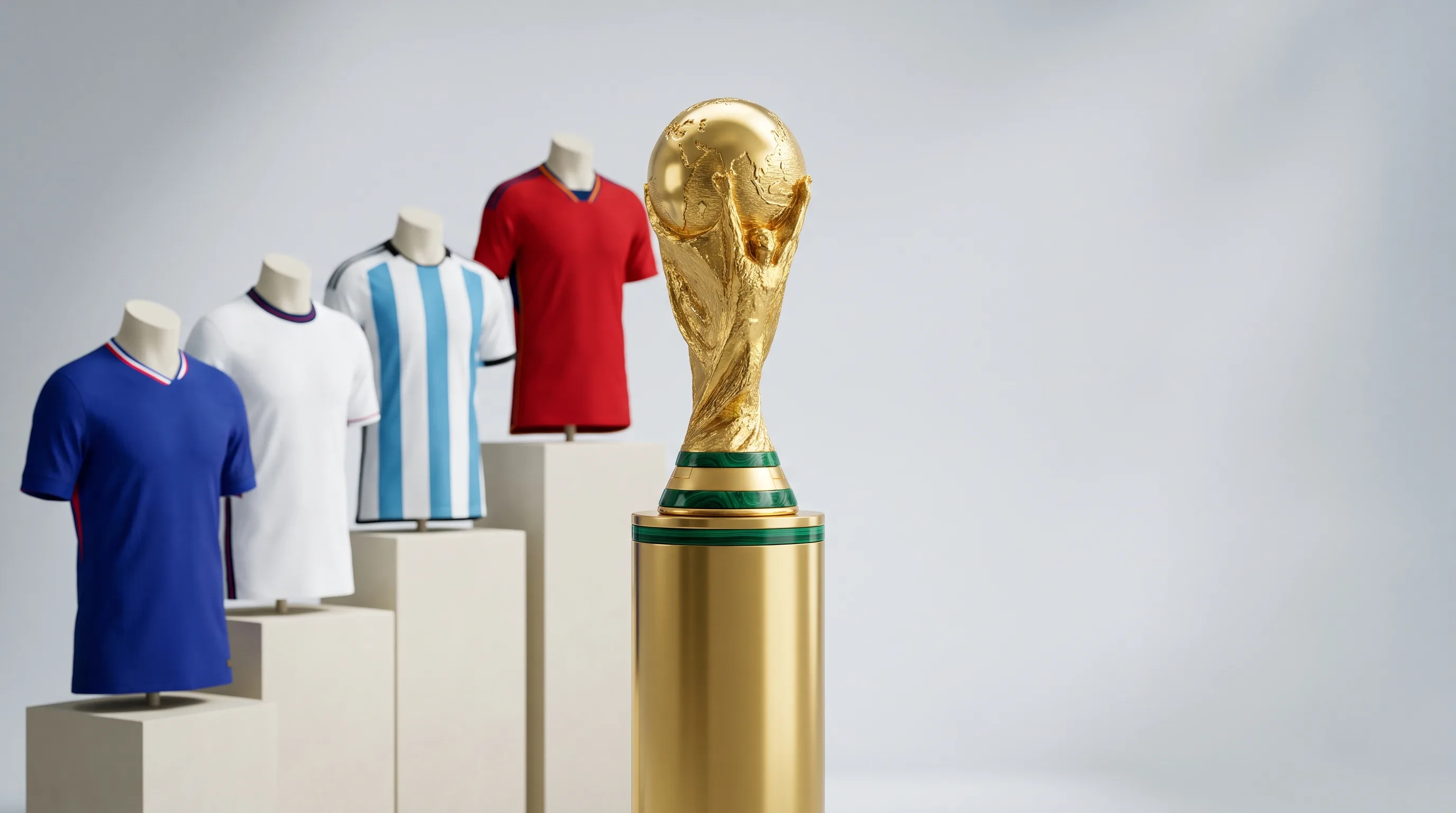
So that is that. Spain are champions of the world, Ferran Torres has a 105th-minute winner nobody will ever let him buy a drink on the strength of again, and MetLife Stadium has hosted the biggest game ever played on American soil. The 2026 World Cup, the first with 48 teams, three host nations and a month and a bit of wall-to-wall football, is over.
We have been watching the whole thing from a slightly unusual seat. While everyone else tracked goals, we tracked Google. We charted which kits won the search war before a ball was kicked, watched the UK search every goal of England's opener, and saw a nation stay up until 4am and then Google what it missed. This is the wrap: the full tournament, measured in searches. The most searched moments, the most searched matches, the most searched players, and the most searched nation, pulled from worldwide Google Trends and Semrush data.
One quick note on how to read the charts. Google Trends does not publish raw counts; it scores search interest from 0 to 100 against the biggest moment in the window you ask about. So when you see 100, that is the single hottest search day or hour of the whole tournament, and everything else is relative to it. Where we want absolute numbers, we bring in Semrush monthly volumes and say so.
Forty days at fever pitch (and the two days it took to forget)
Here is the whole tournament as one heartbeat: worldwide search interest in "world cup", day by day, from a week before kick-off to the day after the confetti was swept up.
The opener on 11 June (Mexico 2-0 South Africa at the Azteca, three red cards before the party had even warmed up) more than tripled the pre-tournament baseline overnight. But look where the pulse actually races. The group stage hums along in the 60s and 70s for two and a half weeks, and then 28 June hits 90, the biggest day of the tournament until the final itself. Nothing legendary happened on 28 June. It is simply the day the knockouts began and all 32 surviving teams could suddenly go home. Then 7 July, the day the last-16 round reached its climax with Argentina surviving Egypt 3-2, lands at 87.
The final on 19 July is, fittingly, the peak: a flat 100. And then the switch flicks off. The day after the final scores 36. The day after that, 10. The biggest sporting event on Earth takes six weeks to build and roughly 48 hours to leave the world's search bar. If you are a brand riding a cultural moment, that is your window, measured with unsentimental precision.
The most searched matches: England were the box office, even in defeat
To rank the matches, we measured worldwide search for each pairing ("spain vs argentina", "england vs norway" and so on) across the whole tournament, all indexed to the biggest of the lot. No prizes for guessing the winner: the final scores 100, and nothing else gets close.
But second place is the story. Argentina against England, the semi-final England lost 2-1, out-searched every other game of the tournament, including the other semi between the eventual champions and France. Add the quarter-final against Norway (68), the 4am epic against Mexico (46) and the ludicrous 6-4 third-place game against France (44), and England appear in four of the seven most searched matches of a World Cup they did not even reach the final of. If search interest decided tournaments, Tuchel's England were finalists.
A word too for Norway 2-1 Brazil, the result that sent the five-time champions home in the last 16. It peaks at 39, which sounds modest until you remember it happened on the same weekend as four other knockout ties, and "norway vs brazil" was a scoreline almost nobody was searching for in advance, because almost nobody saw it coming.
The most searched player lost the final (and it was not close)
Now for the people. We measured worldwide search for the names the world actually types, across the whole tournament, on one scale. Lionel Messi is the most searched player of World Cup 2026, and it is a landslide: half as much again as second place, over an entire tournament, at the age of 39.
Look at when his spikes came. A 65 on 17 June, when he opened Argentina's tournament with a hat-trick against Algeria. A 52 the night his side scraped past Egypt. A 54 when they beat England in the semi. And then his absolute peak, the full 100, on 19 July: the night he lost the final and, with it, the fairytale second star. The single most searched player-moment of the whole World Cup is a great player losing it. Defeat, it turns out, is more searchable than victory.
Second place is stranger still: Cristiano Ronaldo, whose tournament ended in the last 16 on 6 July. Nearly half his search interest arrived in one 48-hour goodbye, as Merino's stoppage-time winner ended his fifth and final World Cup and the internet queued up to say farewell. Erling Haaland takes third, peaking at 51 the night England ended Norway's run in the quarters.
And then the quiet men. Kylian Mbappe scored ten goals, won a second Golden Boot, and finished fourth for attention with a peak of just 18: the world seemingly knows everything about Mbappe already and no longer needs to Google him. Lamine Yamal, who Semrush says now commands the same 450,000 baseline monthly US searches as Messi and Ronaldo, never had the tournament moment to spike off, losing even the Young Player award to his team-mate Pau Cubarsi. And spare a thought for Bukayo Saka: a World Cup hat-trick in the bronze-medal game, and on the worldwide daily scale his name barely moves. More on that in a minute.
The most searched nation did not win the World Cup
Rank the competing countries by worldwide search across the tournament and the winner is Argentina, comfortably. The defending champions carried the biggest name in the sport, the noisiest fanbase on the internet, a semi-final against England, and even a viral rumour (more below) that kept their name in the search bar on days they did not play.
The champions? Seventh. Spain spent the group stage being searched less than half as much as Argentina and only truly detonated twice: the night they ended Ronaldo's career, and the night they won the whole thing, when they finally posted a peak within a whisker of Argentina's. Efficient on the pitch, efficient in the search bar: Spain won the World Cup while generating barely a third of the loser's total attention.
Elsewhere: France banked the second biggest total without ever topping a single day, England rode a run of box-office knockout ties to bronze, the host United States peaked not on a match but on the morning after their team was dumped out by Belgium (the Balogun affair, of which more below, did their search numbers no harm either), and Portugal compressed almost an entire tournament's worth of attention into the week the world said goodbye to Ronaldo.
The countries that searched hardest were not the ones lifting the trophy
Google Trends tells you when the world searched. Semrush tells you how much. We pulled June 2026 volumes for the tournament term in every regional database, using the local-language phrase each country actually types ("copa do mundo 2026" in Brazil, "wm 2026" in Germany, "mundial 2026" in the Spanish-speaking world), because comparing English terms across markets flatters the Anglosphere and misses everyone else.
The result is a lovely piece of perspective. The biggest single tournament search market in June was India, on 550,000 monthly searches, a country that did not have a team in the competition. Pakistan, also teamless, out-searched the United Kingdom. Brazil put up 368,000 despite going out in the last 16 to Norway, and the eventual champions Spain sat tenth on this table, out-searched by half of Europe.
Passion for the World Cup, in other words, has almost nothing to do with participation. Two of the five biggest search markets watched the whole thing as neutrals.
The final weekend, hour by hour: two heartbeats and one detonation
Zoom into the last weekend and you can watch the two games breathe. Saturday night belongs to England and France trading ten goals in Miami: "england vs france" climbs through the evening and peaks at 60 in the 10pm UK hour, right as a 4-0 stroll turned into a 6-4 heart attack and Saka completed his hat-trick.
Then Sunday. "spain vs argentina" idles politely all weekend (a 5 here, a 7 there) until kick-off approaches, jumps to 39, then 67 through normal time, and detonates to 100 in the hour covering extra time, the Ferran Torres winner and the trophy lift. That hour of extra time is the single biggest search hour of the entire tournament, for any term we measured.
And here is our favourite detail in the whole dataset. Ferran Torres scored the winner at around half past ten UK time. His own worldwide search peak, the full 100, lands in the hour after that, once the whistle had gone. The world does not Google the goalscorer when the ball goes in; it Googles him when the game is safely won and it is time to find out who the hero actually is. Rodri, named the tournament's best player moments after full time, spiked to 48 in exactly the same hour. Glory search is a post-match activity.
What the planet actually typed: Google as the world's fixture list
Finally, the breakout queries: the searches that grew fastest during the tournament. If you are expecting poetry, prepare to be disappointed. The fastest riser on the planet, up 1,700%, is "todays world cup match". Third is "fifa world cup brackets". Also surging: "who is playing in the world cup today" and, from Vietnam, "lich thi dau world cup hom nay", which is Vietnamese for today's World Cup schedule. With 104 matches across three countries and a dozen kick-off times, the single biggest search behaviour of World Cup 2026 was the entire planet using Google as its fixture list.
Two exceptions prove the rule. "argentina vs egypt world cup 2026" (+1,150%) earned its spike honestly, in that frantic 3-2 last-16 escape. And "argentina banned from world cup", up 850%, is the internet doing what the internet does: chasing a rumour which, for the record, was never true. In the same tournament window where FIFA overturned Folarin Balogun's red card after a phone call from the White House, and Belgium's appeal failed, the search bar filled up with people asking whether the defending champions were about to be thrown out. Nothing drives search like a story that sounds too big to be real.
The steady-state top table is even more utilitarian: schedule, standings, bracket, fixtures, live. Almost nothing emotional cracks the list. The romance lives in the spikes; the volume lives in the logistics.
What four years of buildup and 48 hours of afterglow teach a brand
Strip out the football and this tournament was a controlled experiment in global attention. Demand built for months, spiked in patterns you could set your watch by (kick-offs, knockouts, and anything involving a superstar in trouble), peaked on one Sunday in New Jersey, and then evaporated in two days flat.
Our take: the winners in search were rarely the winners on the pitch, and the moments that moved the world's search bar were not always the ones on the back pages. If your brand plans around cultural moments, the lesson of World Cup 2026 is that attention is enormous, precisely timed and brutally short. The teams that did well in our data were ready before the whistle, not after it.
That is the World Cup of Search done. Normal service resumes now, until 2030, when we do it all again, probably across three continents. If you want this kind of data working for your brand rather than just written up after the event, you know where we are.